How to barter with a mature medical practice

Let’s face it.  It’s a lot easier to barter with a company that is a little “hungry” than a mature business that has plenty of cash.  As such I’ve run into a couple occasions where it was a little difficult to try to trade with long standing successful medical practices.  That being said, twice I have figured out a deal that worked and I want to share my insights about it with you.  Here are the things I can think of that I did that I think helped seal the deals:

  1. Speak directly with the owner and acknowledge their level of expertise.  Point out that you really want to work specifically with them.
  2. Acknowledge their successful practice and point out that you understand that they don’t NEED to barter.
  3. Here’s the most important part:  Point out that what you are looking for with your barter request is a FAVOR.  You understand that they don’t NEED to barter, but you are also not looking for pro-bono (free) work.  You want to pay them in full for their services, but you need to pay in trade because of your current financial situation.  Most professionals feel a moral responsibility to conduct a certain amount of pro-bono work and it is much more likely that they will consider your offer if they make a connection in their mind between barter and pro-bono. Be sure to actually use the phrase “pro-bono” even though you are specifically saying that you want to pay in full.
  4. Be prepared with a list of the best products/services that you have to offer in trade.  Also be ready to think on your feet and offer different products/services than what are on your list.  On a recent deal when I realized that it was office staff (all women) that would play a major role in the deal, I added a bunch of spa services into my trade list and I think that was what pushed my offer over the top.


Of course after the deal has been made, do everything you can to make sure they are happy with the deal.  Be pro-active and follow through.  It’s very likely that their office will look at your deal like it’s volunteer work and won’t be contacting you to follow through with your part of the trade.  That means you have to try even harder to make sure they get value.  Not only will that fulfill your part of the deal, it will also make it more likely that you (and others) may be able to trade again with them in the future.

 

IMS smart phone app in "Beta"

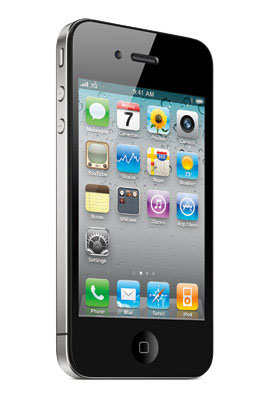
You may recall that back in January of 2011 I posted a wish list of all the things I would like to see in a barter exchange’s smart phone app.  I’m pleased to announce that IMS now has a beta smart phone app for BOTH iphone and android that you can download from the App Store (for iphone folks) or Google Play (formerly Android Marketplace).   The app has a lot of the functions that I asked for.  The folks over at IMS were kind enough to give me a heads up about the new app that you should be able to find for download by simply searching for “IMS barter” where you normally download phone apps.  Please note that this is a beta version so you should not expect perfection yet.

Overall I’m quite pleased with IMS’s first attempt.   It’s a little slow to start when you first click on the application, but other than than the functionality seems flawless.   I’m an Android man so I was able to test it on an Android phone and tablet.  I did not conduct any iphone testing.  I should also mention that it is a FREE application.  The main functions are:

  • Restaurant Search (complete with interactive map)
  • Authorization Request (like the website it is for a seller only)
  • Account info
  • Transactions
  • Contact IMS (makes it easy to contact your broker)


Of course I’m already looking forward to the next version.  I’d like to see:
  • Blue-tooth payment (a buyer could wirelessly send credits to another member running the application)
  • Full member directory look-up (ideally with interactive map)
  • Easy marketplace post (where you snap a picture with your phone and post the item straight from there)

Don't undermine your barter purchases

Anyone who has bartered for very long is aware that occasionally you can run into a vendor that treats you like a second class citizen because you are paying for a product or service in trade. It goes without saying that this is to be avoided and that we should all do our best to service our barter clients just as well as folks that pay with cash on the barrel-head. That being said, it’s also possible to treat your seller poorly when you are buying something on trade.

Let me put it this way: It’s a lot easier to blow off your personal training session if you are paying for it in trade than if you are paying in cash. Doing so however is not fair to your barter partner or yourself. The vendors that you buy services from on trade, like personal trainers, massage therapists, doctors, chiropractors, CPA’s and yes even lowly web developers deserve to be treated like the professionals that they are even when you are paying them in trade. This means you need to show up for appointments, follow through with “homework” they assign, and even take the advice that you are paying them to give.

Additionally I should point out that it is totally self defeating to hire a professional then not follow through.  In order for consultive work to have the desired effect you have to actually act on the advice you are given. When you get that advice at a discount through barter it may be tempting to discount the actual advice. To do so however would be a mistake.

I once read a report that said that the success of any given smoking cessation program is directly proportional to the cost of the program. Simply put, the more expensive the program, the more the participants were emotionally invested in quiting so they had more sucess. So…with that said I think it’s very important to understand how much of a blessing it is to be able to take advantage of services through trade at a substantial cash savings and for you to NOT use this as an excuse that undermines the whole point of the service.

When to pay your exchange commissions

Over the years it has come to my attention there there are a couple things that us barter fanatics can do when we trade that will gain us a little “float” with our transactions and help with cash flow.    Here’s my current list:

  1. If given the option when setting up your exchange account always opt to pay as much of  your commissions as possible when you are making a purchase.  That way you don’t have to pay commissions immediately when you make a sale.  It may even be worth while to pay a slightly higher commission if you can pay it all on your purchases.
  2. Put your “commisionable” transactions through your exchange after the first of the month.  Most exchanges bill on the first of each month.  If you wait until after the first you won’t be billed the commission for an extra 30 days.
  3. Assuming you are paying part of your commissions on your “sell” transactions, then it doesn’t make any sense to build your account up to a high balance.  Not only does this incur barter commissions, but you will also be taxed on this income that is sitting in your barter exchange account.   It is more to your advantage to earn at roughly the same rate as you spend.
  4. Once you have proven to your exchange that you are a good member that can and will earn barter credits on an ongoing basis, they may extend you a line of credit.  By using this line of credit you can purchase products and services without paying any “sell-side” commissions at all up front.  You will of course need to earn those credits back eventually and the commissions will be due at that time.  Also if your exchange is charging you interest on the line of credit that probably more than wipes out any cash flow advantages.

It should go without saying that you should do everything you can to always pay all of your exchange fees on time once they are invoiced.  If for some reason you will not be able to make your payment on time it’s always best to call your exchange and let them know what is going on.  Most people will appreciate your honestly and are happy to work with you to help you get your fees paid.

Tide: The criminal element of barter


Criminals have a vested interest in barter.  It’s simple really.  Barter transactions are harder for enforcement agencies to track than cash.  I’ve mentioned in the past that the alternative electronic currency known as bitcoin is known to be used by drug dealers in an attempt to hide their business.  Now there may be a new and much stranger alternative currency that the underground economy is using:  Tide laundry detergent.  That’s right!  Based on the news articles I’ve been reading (just Google “Tide theft”) criminals have been specifically using Tide as an alternate currency.  If true, I’m sure this is just breaking hearts over at Proctor and Gamble.

Although there is some debate as to the voracity of the news reports about this (snoopes) I think the concept is still interesting.  There is no good reason why we should be trading government issued pieces of paper to buy and sell products/services especially seeing that the paper is a fiat currency that is backed up by no real assets and has no “real” value.  As such a jug of Tide is arguably much more valuable than US dollars.  When you combine that fact with the declining confidence that many Americans have in the Federal Reserve System it makes perfect sense that people are going to look for an alternative currency with real value.

More than anything else I would take these news reports as a sign of the times as to the current openness of folks to accept payment in barter.   As such I recommend to strike while the iron is hot and do your best to recruit as many of your vendors/customers/friends/enemies/etc. into the Cult Of Barter.

Barter Kings TV Show

OK…what I really want to know here is who told A&E about my idea??!!!

http://www.tvguide.com/News/Exclusive-Orders-Barter-Kings-1044955.aspx

Seriously though…a friend and I came up with a similar idea about 6 weeks ago.  There is a difference between our ideas though.  Based on the article above it sounds like they are going to try to do the whole “trade a  paperclip up  to a house” type thing.  I understand why they are taking that route.    It’s a popular story that people love.  I wouldn’t do it that way though because that doesn’t reflect the real barter sub-culture.  Real traders aren’t going to limit their resources and try to trade a single item up as much as they can.  Real traders are always bartering everything.  I think a better framework for a show would be to show how people live every day  with as little cash as possible.  I’ve heard of people that depend on barter for 80 or 90% of their income.  That’s what I’d be interested in seeing.

BTW…thanks to Paul for the heads up on this one!

Barter Vs. Haggle

In case you are one of those folks that don’t know the difference, let me lay this out for you and make it CRYSTAL CLEAR.  The words “barter” and “haggle” do not mean the same thing!  Am I the only person that is driven crazy when these words are sometimes used interchangeably??!!  Even my wife (who can’t escape a constant barrage of barter banter) mixes these terms up sometimes.  Here are the correct definitions:

Barter:  To trade one product or service for another.

Haggle:  To negotiate for the best possible price for a product or service.

I think the cause for confusion is twofold:

1)  Traditionally, Americans neither barter nor haggle much.  As such I think many of us simply lump them both into the mental category of  “that undesirable thing that some people do when they try to buy things cheap.”

2)  Of course part of bartering involves determining the value of the traded item and that can often include some haggling.  The confusion is caused by the fact that both are often conducted at the same time.

The reason that it’s important that folks understand the difference is because many Americans simply refuse to haggle.  If they mix these two terms up, their distaste for haggling will infect their feelings about barter.  So I send you forth, my little barter fanatics, to educate the world and spread the gospel of barter.  Whenever you can please point out the differences between these two terms.

Craig's List Potheads

Am I the only person that is sick and tired of people trying to trade pot in the barter section of craigslist.org?  Come on people!  In my area it feels like 10 to 20% of all posts in the barter category are folks that are either looking to score some weed or looking to sell it.  Of course they usually use colloquialisms to refer to it.  They call it “215” or “420.”  Listen pot-heads:  Even in the liberal state of California it’s illegal to sell pot.  And bartering is selling.  Just ask the IRS.  Please get a life and stop cluttering up all the good barter listings on craigslist.

Speaking of which, I spotted this listing on craigslist last week in the barter category:

wife for trade – $70000 (santa rosa)
annoying wife for trade or sale. I’m tired of her you can have her.
rv quads ps3 games what you got?

So… is it just me or does this poster need a lesson in salesmanship?  He says that his wife is annoying, but then wants $70,000 for her.  Also I’m having a hard time trying to imagine how many ps3 games it would take to be worth $70,000.

Diary of a doomed trader

I wish this was the first time I’ve heard this story…but it’s not.  Please accept this story as a warning of all the things a barter exchange should NOT do. In case you are not familiar with what a “barter exchange” is please check it out here.

I just got off the phone with a former member of an exchange I’m in.  I say former because he tells me that he told the exchange that he was closing his account over 6 months ago.  The reason I was calling him was because the exchange had recently sold me a gift certificate for his services (that he will not be honoring).

Mistake #1
The vendor says that he was led to believe that there were many members in his immediate area when in fact there were not.  I’m a firm believer that a member’s success (or lack there of) is directly related to the volume of members in their geographical area.  If you are recruiting a member that isn’t in an area with a lot of other members you have to be up front about that.

Mistake #2
The vendor says that the exchange does not police member pricing.   Over pricing is a major industry problem and I don’t see it going away any time soon.  I think the solution is for exchanges to police pricing and kick out gouging members, but honestly I don’t think most exchanges have enough staff to stay on top of this.  What I told this particular person was that if his exchange won’t watch out for over-pricing then he’d have to do it himself.

Mistake #3
The vendor says he was given poor customer service in general by the exchange.  He says they didn’t do any training with him and weren’t particularly helpful when he ran into problems.  From his point of view the only time they ever called him was after he decided to sever the relationship and even then it was just to harass him for monthly fees.

Please note that what I’m telling you is all from this former member’s point of view.  The conversation I had with him was lucid and cordial and I tend to believe what he said.  That being said I’m quite sure that his former exchange would have a different take on the events.

Why you should be their favorite customer

Every likes to be liked but when it comes to barter there is extra incentive to be lovable.  As we’ve discussed in the past, everyone has a limit as to how much barter they should engage in.  That’s even true for us barter fanatics.  What I’ve learned however is that when folks have to cut back on barter, they will often times still trade with their “favorites.”  So my advice for you is to be one of those favorites.

Contrary to what you may think, being a “best customer” does NOT mean spending the most money with that vendor.  Usually it simply means that you have a relationship beyond a financial transaction.  It’s as easy as asking how somebody’s kids are doing.  Being a best customer means showing up for appointments.  It means not grinding vendors on price.  It means valuing and following the advice of consultants that you hire.  It means being flexible about the product/service you are interested in.  It means understanding that your deals need to be advantageous to both parties.

Of course it probably wouldn’t be a bad idea to live your life like this every day, however, as I mentioned earlier, there are extra perks in the barter world for being a favorite customer.