The mobile app that I want

Dear barter exchange Big Wigs-

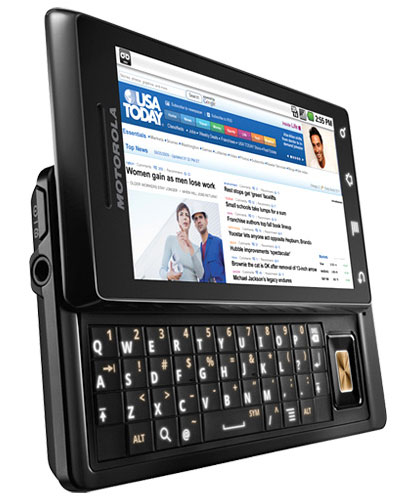
If you are trying to figure out what your new  smart phone app should do, here it is:

  • GPS enabled Restaurant/hotel look-up for barter exchange members
  • member search (GPS enabled)
  • authorize transactions (with email confirmation)
  • wireless transactions between two phones, aka “paperless scrip” (blue-tooth)
  • one-touch call or email your broker
  • one-touch call the closest broker in your exchange (GPS enabled)
  • streamlined posting of  items to the exchange’s on-line store using your camera phone
  • one touch scrip purchase to be mailed to my office

Don’t forget that you should build this for Android phones and Iphones.

Switch vendors to spend barter credits

I spoke to a barter partner recently who said he was having a hard time finding smart things for him to spend his barter credits on.  He belongs to a good national barter exchange that has many vendors that are local to him because they have an office in the same town as his office.  I belong to the same exchange and spend thousands of dollars wisely each month.  So…..it got me thinking….what can he do that he isn’t doing now?  I came up with two answers:

  1. Switch Vendors
    When you already have a vendor in place to provide you with a particular product or service, there is a lot of resistance to switching.  That being said, in order to get the most out of bartering, you have to actually spend barter credits.  That means that you have to at least consider switching from cash vendors that you know and love to unknown barter vendors.  It’s a bummer to say goodbye to trusted suppliers but the pay-off can be huge.  A couple examples that I can think of that were particularly difficult for me was our dentist and someone who helped with house-keeping.  When we failed to get either of them to barter with us, we decided that we had to at least try vendors that would barter.  Both of the new relationships ended up going well and of course we are now saving all of the cash that we were formerly spending.
  2. Recruit New Parter Partners
    Another area that has helped me spend barter credits is to recruit new barter partners.  Don’t be satisfied with simply looking at the list of vendors that already belong to your barter exchange.  Choose a particular product/service that you would like to barter for, find some prospective bartering partners and make the pitch.  The beautiful thing about pitching barter is that it is usually very easy to explain that it is a win-win proposition.  Don’t be nervous about suggesting barter.  Many accomplished business people love to barter

Also, don’t forget to apply these two principles to personal expenses also.

Barter Price Gouging

One of the common complaints that I run into with unsuccessful barter exchange members is that other members  price gauge.  Honestly, it’s a complaint I make myself sometimes too.  I think there are a couple reasons why this problem can crop up.

1)  It’s not fair to compare the best possible cash price to the barter price.  In general it’s an unwritten rule that everyone charges their full retail price in barter.  I think it’s totally reasonable to charge MSRP for barter goods even if you NEVER sell at MSRP for cash.  All sales or discounts should also be ignored when selling a product/service for barter.  This is true both when you sell your product/service and when you buy a product/service on barter so that price increase should cancel itself out when you take into account your own barter prices. With this in mind, you shouldn’t try to compare the barter price to a sale price, a big-box-store price, a price on craig’s list or a price on ebay.  Make sense?  You are GOING to pay more on barter, but of course, you are still earning barter credits at your wholesale rate so you should still be well ahead of the game.  Plus this can help recruit new barter partners.  When I’m talking to someone who is new to barter I will almost always tell them I can “pay high retail” or  MSRP if it’s on trade.

2)  Some vendors really and truly do over-price their services on barter.  I had a plumber over a couple weeks ago to fix a leaking sink.  When it was all said and done he left with over $600 in barter credits for about an hour’s worth of work.  I was blown away.  The truth of the matter was that I didn’t have the cash to pay a plumber to do this work even at a reasonable rate and I didn’t have time to do it myself, so I was stuck and just didn’t have any choice this time.  That being said, you better believe that I will NEVER call this vendor again.  I will also tell anyone I know (both in the barter and cash world) that I would never use this vendor.  As a matter of fact, within a week of this happening, my neighbor called and asked me if I knew of a good plumber (for a cash job) and I told him NOT to use this vendor.  The lesson to me was to be especially careful with tradesmen on barter and to get an estimate if I can on the phone before they even come out to my house.  The other lesson is actually for this vendor:  If you rip someone off on barter, it will effect your business reputation in the cash world.

3) Some vendors seem to think that it’s OK to price gauge simply because they think their cash costs are higher than most.  Sorry.  I don’t buy that.  If there isn’t enough of a margin on a product/service to barter profitably at reasonable prices, then you shouldn’t barter that product/service.  Period.  Exactly the same rule applies to the cash world.

4)  I think one of the reasons that some vendor’s price gouge is simply that they can.  Some products/services are in high demand and they regularly get away with super-high rates.  If you are dealing with a devalued barter currency and can earn it really cheaply then I could see over-paying to get something in high demand.  Other than that… forget it.  Do your homework and keep walking if the price is too high.

Try not to take over-pricing personally.  Generally speaking, vendors with really high prices aren’t doing it just to you.  They are trying to hit everybody.  I don’t understand moral outrage at high prices.  If someone’s price is too high I just keep looking elsewhere.

For the haggling-challenged there are a few types of trades where you are pretty much guaranteed a reasonable price: Restaurants and retail stores.  On both of these types of traders you purchase from a printed menu or a pre-marked price and you should feel safe that you are paying the same as a cash customer.

Bottom line:  Don’t let the folks that over-price their goods/services ruin barter for you.  Barter is too great to let things like this get in your way.  Know the value of your barter credits and the value of what you want to trade for.  Take the good deals and reject the bad ones.  It’s that simple.

Why Exchanges Won't Accept Some Businesses

A big part of successful bartering is your ability to recruit new barter partners.  If I only traded with existing members of my barter exchanges I would be bartering a lot less (more about barter exchanges).  I decide what product/service I need, then go check out my existing exchanges.  If they don’t have what I want, then I strike out on my own starting out with CraigsList and expanding my search from there.  Often times when I find a new potential barter partner, I try to recruit them into one of my barter exchanges.  I have no problem with trading direct, but there are a lot of limiting factors with direct trade that barter exchanges can remove.  It came to my attention a while back that there are simply some industries that my exchanges have no interest in.  This post is to help you understand why some businesses are more attractive than others to exchanges and what you can do about it.

There are a couple different spins on why an exchange may not want a new member but they all come back to money.  Specifically it has to do with the exchange’s estimate as to how much volume they will most likely be able to trade.  An exchange has to put resources into adding new members so it simply is not profitable for them to sign up a lot of members that aren’t trading.  I spoke to an exchange recently that told me they really try to avoid signing anyone up that they don’t think can earn/spend a minimum of $3,000 to $4,000 annually.  I’m in California so that number may be lower in some less expensive parts of the country.

Here are some common reasons for not signing up a potential member:

  1. Based on past experience, an exchange may simply close particular industries because they have been low volume in the past.  They may have tried multiple times with this industry and found it unprofitable.
  2. The exchange may already have another member in the same industry as the potential member and the exchange may not feel that there is enough business to support multiple members in the same category.
  3. An exchange may think that some industries are simply more trouble than they are worth.  This could mean that there are industries that generate a lot of complaints and are big eaters of time and resources for the exchange.   A perfectly legal industry that I’ve noticed exchanges shy away from is firearms.  I’ve bartered for firearms directly many times without a hitch but (especially out here in California) I think it’s viewed as an industry that will create paperwork/legal headaches for exchanges.  I’ll come back and post another article later about why this is totally wrong and exchanges should allow barter for firearms.

So….as an exchange member who has a new potential barter partner that you want to join your exchange, what can you do about this?  Here is my advice:

  1. Check with your exchange before you put a lot of resources into recruiting a new member.  If you know you are going to have to barter direct with with this new partner, it’s better to know that earlier rather than after you’ve told them how wonderful your exchange is.
  2. You’re more likely to talk your exchange into accepting the new member if they sell a product/service that can be provided/shipped nation wide.  That way you can explain that it’s not a problem that they have another local vendor in the same industry.
  3. The best way to talk your exchange into accepting a new member that they feel is borderline is to tell them that you will be using the vendor a lot.  A while back I recruited my kid’s martial arts dojo into my exchange.  They already had another dojo in the exchange and I think they were unsure as to how much business the new member might get.  When I told the exchange that I’d be paying for all three of  my kids to go on an ongoing basis, that made all the difference.

Bottom line here is that sometimes you have to exercise some salesmanship, not only on a vendor that you’d like to barter with but also your exchange.  You won’t win every time but the more you understand the dynamics the better chance you have.

The ultimate barter birthday

My twin sons just turned 9.  Although my wife normally plans birthday parties this one was my responsibility as she is recovering from neck surgery.  My challenge was to come up with the coolest all-barter party I could.  Here’s what we did:

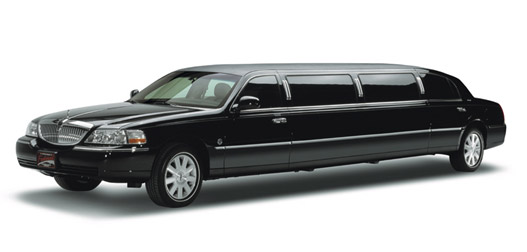
  1. We picked up my sons and their friends from school in a limo.  Finding a 100% barter for the limo was a challenge.  I ended up finding a company owned by someone I knew a little and traded him for gift certificates to a local gym.
  2. We had the limo drive us to a local bakery that specializes in cupcakes.  There each kid was able to decorate and eat their own cupcake.
  3. We then had the limo take us to a local amusement park where the I had prepaid “credit cards” for each of them that were good for mini-golf, bumper cars, video games, etc.  We hung out and played for a couple hours.
  4. Unfortunately we don’t have a pizza joint close to us that I can barter with so we had the limo stop by Costco for a couple pizzas.  That was quite an experience.  I never would have believed that I would shop at Costco via limousine.
  5. The kids then had a slumber party, but the next day we took them to a local gym where their favorite basketball coach gave the whole gang of kids a private lesson.
  6. Lastly the “goodie bag” for each kid was a $5 gift certificate from a local frozen yogurt shop.

Whew!  The only cash I spent was on tips (to the bakery lady and limo driver) and $20 worth of Costco pizza.

Mixing barter and cash – part II

In our last article we talked about many reasons mixing barter and cash can be a bad idea.  That being said, there are some situations where it makes sense to make hybrid barter/cash deals.  Here are some that make sense to me:

  1. Taxes/tips/shipping etc.
    This doesn’t need any explanation does it?
  2. Using barter to get a new cash client
    I’ve had a bunch of times where I’m cold calling a potential client and I use barter as a really good differentiator to win the project.  For example,  I may be calling on a potential client for cash business and as an added bonus I will say: “If you want I can accept some of the payment in trade for your product/service.”  This approach has worked successfully for me on multiple occasions.  The ultimate goal was to win a new cash client but taking part of the payment in trade in order to sweeten the deal made the difference.  I then do part of the job in trade and bill cash for the rest.  Of course, you can only do this when the product/service that the potential client deals in has value to you.  Obviously this only applies to potential clients that are not in your barter exchange.
  3. When a long-term cash client is a member of your barter exchange
    I have only had this happen once, but seeing that it happened to me, it could happen to you.  I had an existing cash client that I’d been doing business with for years.  When I joined a barter exchange I found out after the fact that this existing client was in the same exchange.  After a while he realized this also and approached me about switching from cash to barter.  Now as much as I like barter, I would ALWAYS rather have cash so the last thing I want to do is switch existing cash clients over to barter.  Seeing that he was a cash client of mine long before I ever even knew that barter exchanges even existed, I would have been well within my rights to refuse his request outright.  That being said, that approach would not have done much to encourage our ongoing relationship.  Honestly I felt a little trapped and even though I didn’t have to start bartering with him, I felt like I had to do something or else it would appear that I had no interest in my client’s best interests.  So…I struck a deal to switch him over to a 50/50 cash/barter deal.  That way I’m still getting a good chunk of cash, but I showed a lot of “good faith” to the client.
  4. On larger trades with barter currencies that are not in demand
    This last example is actually a deal I’m working on right now.  A potential client approached me through one of my barter exchanges.  I currently have more credits than I need with this particular exchange so I was politely turning this person  away.  In the course of the conversation, the prospect asked if I was interested in the job if he paid me 50% in cash.  Most exchanges do not allow this type of deal so without thinking I turned him down on this offer also.  After hanging up the phone I remembered that this particular exchange only requires that the first $3,000 of a trade be barter and after than it can be cash.  Seeing that the whole project was around $6,000 the exchange would allow for a 50/50 deal.  I immediately called him back and we’re working on putting together a deal now.  I don’t really need more credits with this exchange right now but if I’m getting 50% cash it’s a viable deal for me anyway.

Mixing barter and cash – part I

Fairly often when trying to make a trade someone will suggest that we make the trade 50% barter and 50% cash.  In this article we’re going to explore why this comes up, if it’s a good idea, and how to respond.

The most common reason that a 50/50 trade is suggested is that the vendor you are talking to says that they need to cover their cash costs.  When working through a barter exchange  I think this is a totally bogus excuse because everybody (including you) needs to cover their cash costs.  That’s why you have cash customers.  When I am bartering through an exchange I eat my cash costs when I earn credits and I expect my bartering partners to eat their cash costs when I spend my credits.  Fair is fair.  Often I also run into specific industries that claim that their cash expenses are higher than others, which justifies their asking for cash.  This doesn’t hold any water with me either:  If their cash costs are really that high then they should not barter that particular product or service.  It is simply not equitable for some people to charge cash when they earn barter credits and then spend 100% barter when they make purchases.

The problem with a 50/50 cash barter scenario is that it greatly reduces the value of barter.  By 50% to be exact.  Let’s say you are earning barter credits and your profit margin is 50%.  By the time you pay your commissions on barter let’s say you have a 40% profit margin.  So that means that when you purchase on barter you are getting a significant 40% discount.  Of course the argument could be made that barter prices are pretty high which would further dwindle that discount rate.  Now, if you make a deal on 50% cash, your discount just dropped to 20% or less.  Certainly 20% is better than nothing however when you add in the extra work that it is to barter over a cash transaction and the reduced purchasing options, it’s really starting to not look like such a great deal.

Here’s another thought:  What if everyone charged 50% cash?  All you would be doing is reducing the savings that you get with barter by 50%.  Think about it…it’s nice to receive 50% cash for everything you sell, but what if you had to pay 50% for every time you purchase? Not only would it make barter less valuable to you, it would make barter less valuable to everyone and very soon you would start receiving less new business through the barter system.

When you are working through a barter exchange on a fairly small transaction and someone suggests 50% cash, my advice is to play hard ball and say that you can only make the deal at 100% barter.  Honestly, I’d rather pay 100% cash to a different vendor that has my best interests in mind.  I can usually find a lower price for cash anyway.  I also usually let my broker know what happened so they know what’s going on too.

Next time:  It’s not all bad.  There are some times when a partial cash deal can make sense and is a win/win for all parties.   We’ll explore that in the next article.

Finally looking good!

Well it took a while but we finally have this blog looking a little better.  For the longest time my staff have been busy and I haven’t been able to have them work on getting this blog looking “pretty.”  It’s one of those “cobbler’s children have no shoes” things.  Anyway… I would like to thank my friend Steve Rustad (over at www.rustadmarketing.com) for helping me with my “fanatic” logo.  I’d love to hear back if you have any comments about the new look.  I’m really relieved that it’s up to par now because for the longest time I thought the content of the blog was good, but I was embarrassed by the look and felt like some folks might think that my firm can’t build a decent looking website.  I hope you enjoy the new look as much as I do!

Tithing on barter

After bartering for a while it occurred to me that my trade profit was significant and that I really should be tithing at church on the profit that I’m earning on trade.  For a couple months I started tracking my trade profit and tithing cash for it.  It didn’t take long for me to realize that I hadn’t come up with a good solution.  I simply couldn’t afford to keep paying out cash tithes on barter profits.  I’ve spoken with a couple people and have come up with two potential solutions:

The easy solution is simply to set your church up with a barter exchange account and tithe in barter credits on the barter portion of your profit.  The problem I have with that solution though is that it puts the burden of managing the account and figuring out what to use it for on your church.  I don’t know about other churches, but the staff at my church already have plenty on their plate and really didn’t need another job added.

My solution is more work for me, but I think it’s the best way to go.  I contacted my Pastor, and let him know the situation.  I explained to him that I wanted to tithe on my barter profit, but I simply couldn’t do it in cash.  We agreed that we would both watch for things that the church needed that could be purchased on barter and that I would then take care of those needs based on records I was keeping with regard to what I needed to tithe in barter.  This way it doesn’t put any new work on church staff and at the same time, I don’t need to tithe cash on barter profits.